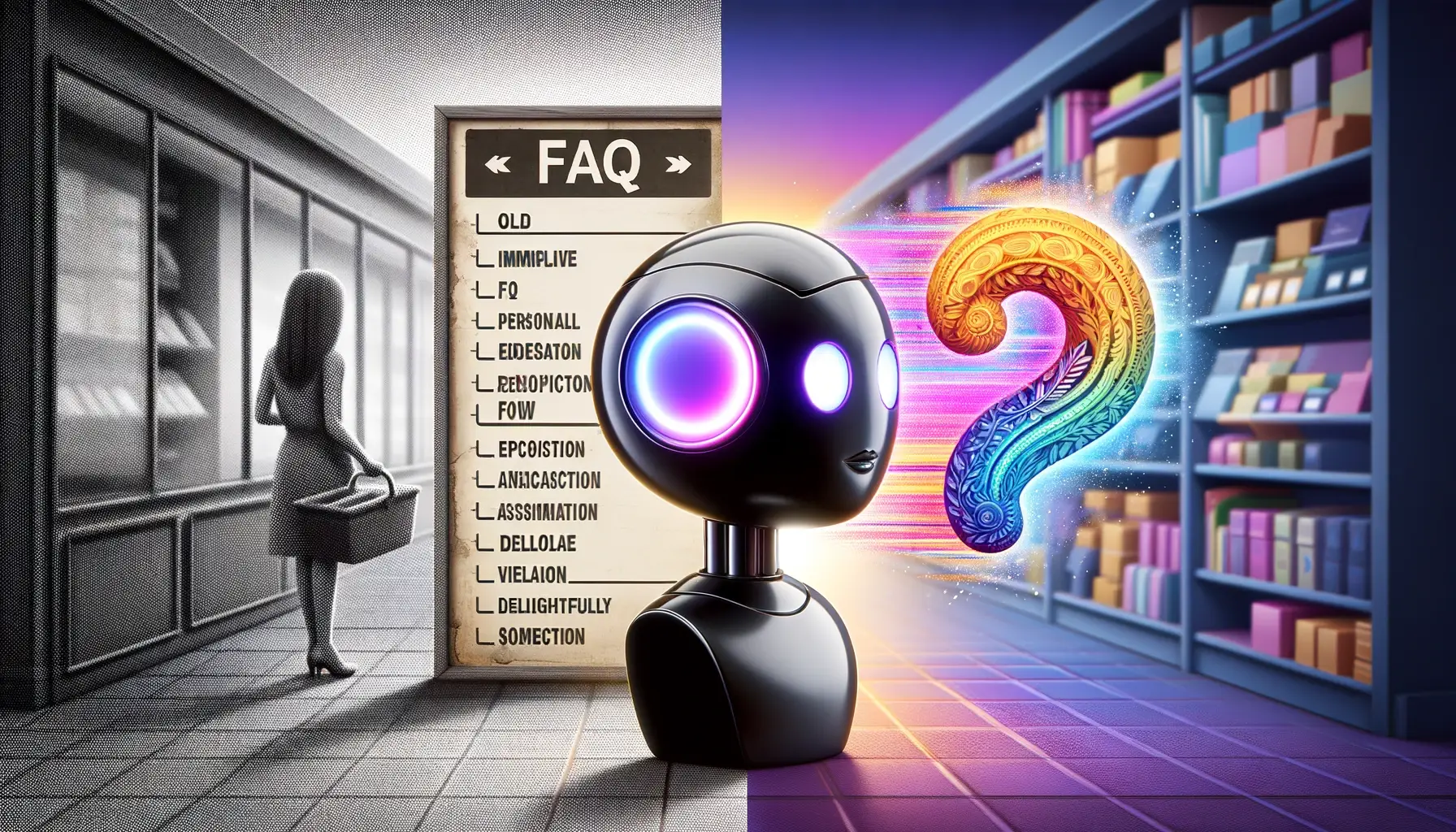
From FAQs to AI: Elevating Retail with Virtual Assistants

Transition from the static world of Frequently Asked Questions to the dynamic, responsive universe of AI-driven virtual assistants. In this new era, queries are met not with generic responses but with personalized interaction, turning every customer inquiry into an opportunity for engagement and connection. These virtual assistants, powered by sophisticated AI, learn from each interaction, becoming ever more adept at understanding and meeting the nuanced needs of each customer. The leap from FAQs to AI is not just an upgrade; it's a transformation of the retail experience, making it more intuitive, efficient, and delightfully human.

From FAQs to AI: Elevating Retail with Virtual Assistants

In today’s rapidly evolving retail landscape, businesses are constantly looking for innovative ways to enhance the customer experience and streamline operations. One emerging technology that is revolutionizing the retail industry is virtual assistants. From answering frequently asked questions to utilizing artificial intelligence, virtual assistants are transforming the way retailers engage with customers and drive sales.

What are Virtual Assistants?

Virtual assistants are AI-powered chatbots that interact with customers in real-time, providing personalized assistance and information. These virtual assistants can be integrated into websites, mobile apps, and social media platforms, allowing retailers to offer 247 support to their customers. By automating responses to common queries and providing instant assistance, virtual assistants help retailers enhance customer satisfaction and increase sales.

Benefits of Virtual Assistants in Retail

  • Improved Customer Service: Virtual assistants can quickly respond to customer inquiries, providing accurate information and personalized recommendations. This helps retailers deliver exceptional customer service and build strong relationships with their customers.
  • Increased Efficiency: By automating responses to frequently asked questions, virtual assistants free up human agents to focus on more complex tasks. This improves operational efficiency and allows retailers to serve a larger number of customers simultaneously.
  • Enhanced Personalization: Virtual assistants can analyze customer data and preferences to offer personalized product recommendations and promotions. This level of customization helps retailers boost customer engagement and drive sales.
  • Cost-Effective Solution: Virtual assistants are a cost-effective alternative to hiring additional customer service agents. By automating routine tasks, retailers can reduce overhead costs and improve their bottom line.

Leveraging AI for Virtual Assistants

Artificial intelligence plays a crucial role in the functionality of virtual assistants, enabling them to understand and respond to customer queries with a high level of accuracy. By leveraging AI technology, retailers can enhance the capabilities of their virtual assistants and provide a more seamless shopping experience for their customers.

AI-Powered Features of Virtual Assistants

  • Natural Language Processing: Virtual assistants equipped with AI technology can understand and respond to customer queries in a conversational manner. This improves the overall user experience and makes interactions with virtual assistants more intuitive.
  • Machine Learning: Virtual assistants can learn from past interactions and customer data to continuously improve their responses and recommendations. This allows retailers to offer more personalized and relevant assistance to their customers.
  • Predictive Analytics: AI-powered virtual assistants can analyze customer behavior and preferences to anticipate their needs and provide proactive assistance. This predictive capability helps retailers drive sales and enhance customer loyalty.

Implementing Virtual Assistants in Retail

When implementing virtual assistants in retail, it is essential to follow best practices to maximize their effectiveness and ensure a positive customer experience.

Tips for Successful Deployment of Virtual Assistants

  • Define Clear Objectives: Before implementing virtual assistants, retailers should clearly define their objectives and the role of virtual assistants in achieving them. This will help align the virtual assistants’ functionality with the retailer’s business goals.
  • Train Virtual Assistants Effectively: Proper training is essential to ensure that virtual assistants can accurately respond to customer queries and provide helpful assistance. Retailers should invest in training programs to enhance the capabilities of their virtual assistants.
  • Monitor Performance Metrics: Retailers should regularly monitor key performance metrics, such as response time, customer satisfaction, and conversion rates, to evaluate the effectiveness of their virtual assistants. This data can help retailers identify areas for improvement and optimize the performance of their virtual assistants.
  • Continuously Improve Virtual Assistants: Virtual assistants should be regularly updated and improved based on customer feedback and evolving market trends. By continuously enhancing the capabilities of their virtual assistants, retailers can stay ahead of the competition and deliver a superior customer experience.

In conclusion, virtual assistants are a powerful tool that can help retailers elevate their customer service and drive sales. By leveraging AI technology and following best practices for implementation, retailers can harness the full potential of virtual assistants to enhance the customer experience and achieve their business objectives. Embracing virtual assistants is not just a trend but a strategic imperative for retailers looking to stay competitive in the digital era.

FAQ

What are Virtual Assistants?

Virtual assistants are AI-powered chatbots that interact with customers in real-time, providing personalized assistance and information. These virtual assistants can be integrated into websites, mobile apps, and social media platforms, allowing retailers to offer 247 support to their customers.

What are the benefits of Virtual Assistants in Retail?

  1. Improved Customer Service: Virtual assistants can quickly respond to customer inquiries, providing accurate information and personalized recommendations.
  2. Increased Efficiency: By automating responses to frequently asked questions, virtual assistants free up human agents to focus on more complex tasks.
  3. Enhanced Personalization: Virtual assistants can analyze customer data and preferences to offer personalized product recommendations and promotions.
  4. Cost-Effective Solution: Virtual assistants are a cost-effective alternative to hiring additional customer service agents.

How does Artificial Intelligence enhance Virtual Assistants?

Artificial intelligence plays a crucial role in the functionality of virtual assistants, enabling them to understand and respond to customer queries with a high level of accuracy. By leveraging AI technology, retailers can enhance the capabilities of their virtual assistants and provide a more seamless shopping experience for their customers.

What are some AI-powered features of Virtual Assistants?

  • Natural Language Processing: Virtual assistants utilize natural language processing to understand and respond to customer queries in a human-like manner.
Share the Post:

Related Posts

Virtual Agents as Sales Strategists - Leo Getz IT

AI and the Art of Upselling: Virtual Agents as Sales Strategists

Dive into the world where AI-driven virtual agents master the art of upselling, turning every interaction into an opportunity for strategic sales enhancement. These virtual sales strategists analyze customer preferences, purchase history, and real-time interactions to suggest complementary products and upgrades that genuinely interest the customer. It’s a delicate balance between insight and intuition, powered by AI, that elevates the shopping experience by offering value-added suggestions that customers appreciate. Virtual agents are not just selling; they’re advising, making every recommendation a step towards a more personalized and satisfying shopping journey.

Read More
How Virtual Agents Reduce Cart Abandonment - Leo Getz IT

Securing the Sale: How Virtual Agents Reduce Cart Abandonment

Navigate the crucial moment of online shopping: the checkout process. Here, virtual agents become invaluable allies in reducing cart abandonment. They understand the hurdles customers face—be it confusion, indecision, or just the need for a slight nudge. Through timely interventions, personalized offers, and answers to last-minute queries, these AI companions gently guide customers across the finish line. This isn’t just about saving sales; it’s about creating a shopping experience so seamless and supportive, customers feel confident and cared for at every step. Virtual agents are redefining the checkout experience, turning potential drop-offs into delighted completions and loyal customers.

Read More